Home / Notable People

06 — People raised by the highland

From a mountain town,
out into the world.

From a highland community with little flat land came a judo master celebrated as one of the sport's great mentors, and, in the Taisho era, a member of parliament who took on national politics. In more recent years, a businessman's deep contribution to his hometown made him the town's first honorary citizen. Behind the legends of the gods, this land has clearly raised people too.

People who lived on this highland, and went out into the world

A great mentor of judo

Setsuo Sugata — the teacher who raised countless champions.
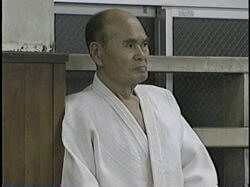
Setsuo Sugata

Setsuo Sugata

Judoka, 9th dan Kodokan / 1916–1999

Born in 1916 in Furukawa, Jinseki-cho, Jinseki-gun (now part of Jinseki Kogen). He joined the Kodokan in 1932, and by the time he graduated from Fuchu Middle School in 1934, is said to have already reached 3rd dan — a rare achievement for a middle-schooler nationwide at the time. After entering the professional program at Meiji University, he became a live-in disciple of the master Kyuzo Mifune, studying under him for around eight years.

He competed in the 1936 All-Japan East-West Championship as its youngest entrant, and challenged the 1951 All-Japan Championship at age 35; though he lost in the first round, his commitment to remaining active for life has been described as "the true essence of a judoka." Succeeding Mifune as head instructor at Meiji University, he trained a long line of All-Japan and world champions, including Yasuji Sone, Akio Kaminaga, Haruki Uemura, Hidehiko Yoshida, and Naoya Ogawa, and worked to establish the women's judo club. He also served as a standing director and advisor of the All-Japan Judo Federation, and was awarded 9th dan in 1984.
A short history of the Kodokan: The Kodokan is said to have begun in May 1882 (Meiji 15), when Jigoro Kano opened a roughly 12-mat dojo at Eishoji temple in Tokyo's Shitaya district. His first and only student at the outset was Tsunajiro Tomita, but Kano went on to study and reorganize techniques from schools of classical jujutsu, including Tenjin Shinyo-ryu and Kitoryu, establishing "judo" as a coherent system built on principle rather than brute strength. In 1887 he codified forms such as the Throwing Forms and Grappling Forms, laying the technical groundwork, and in 1909 the Kodokan became a legal foundation, cementing its role as the central body certifying judo dan ranks nationwide. Both the year Sugata reached 3rd dan as a middle-schooler (1934) and the year he was awarded 9th dan (1984) took place under this same rank system as it developed.

A Taisho-era member of parliament

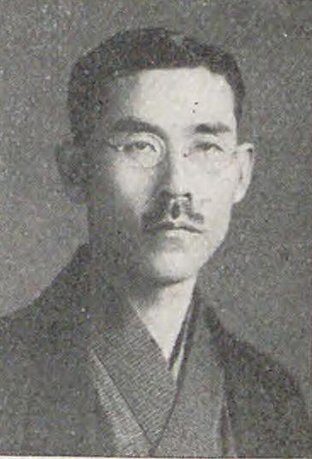
Shigeru Nagaya — from a mountain village to the Diet.

Shigeru Nagaya

Shigeru Nagaya

Lawyer, member of the House of Representatives / born 1877

Born in Shinami village, Kanu-gun, Hiroshima Prefecture (now part of Jinseki Kogen, Jinseki-gun). After graduating from the Hiroshima Prefectural Normal School, he studied law at Nihon University, graduating in 1910. He moved to Tokyo to become a lawyer, and is recorded as having worked as an assistant under the prominent lawyer Takuzo Hanai.

He ran in the 14th general election for the House of Representatives in 1920 as a candidate of the Rikken Seiyukai party, and won a seat. Alongside his work as a lawyer and patent attorney, he also served as an auditor of the Nippon Jinzo Kenshi (Rayon) Company — one example of a young man born in a mountain village who made his way, by the weapon of law, to Tokyo and into national politics.

The era of "Taisho democracy": Around 1920, when Nagaya became a member of parliament, party politics was gaining strength amid the trend known as "Taisho democracy." In 1918, Rikken Seiyukai party president Takashi Hara became prime minister, leading the first genuine party cabinet not drawn from the old domain cliques or the peerage — he was known as the "commoner premier." In 1925, the Universal Manhood Suffrage Law abolished tax-based restrictions on voting, granting the vote to all men aged 25 and over. The era in which Nagaya made his way from a mountain village into national politics overlaps with this expansion of party politics, which made it easier for locally prominent figures to move into national government.

The town's first honorary citizen

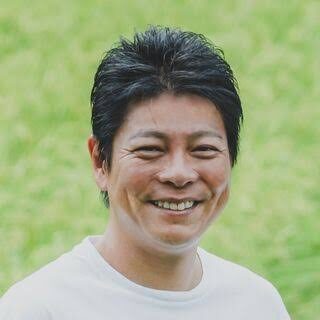
Masaru Tange — giving back to his hometown.

Masaru Tange

Masaru Tange

Businessman, President & CEO of SHIFT Inc. / born 1974

Born September 22, 1974, in Sanwa-cho, Jinseki-gun. He serves as president and CEO of SHIFT Inc., and served for two years from April 2017 as an economic ambassador for Jinseki Kogen.

In December 2020, through the furusato nozei (hometown tax) program, he made a substantial donation toward childcare facility improvements and child-rearing support programs, contributing to the town's development and public welfare. In recognition of this achievement, he was honored on July 21, 2021 as Jinseki Kogen's first honorary citizen. He remains, to date, the only person to hold that honor.

How the furusato nozei system works: Furusato nozei lets a person choose, of their own will, which municipality to support with a donation. It was created to address the way population concentration in cities was draining tax revenue from the municipalities people had left behind. When someone donates, the full amount above a fixed 2,000-yen self-payment is deducted from their income and residence taxes; salaried workers can even use a "one-stop exception" system that removes the need to file a tax return. Many municipalities let donors choose how their contribution is used, directing funds toward childcare and child-rearing support, education, or infrastructure suited to local needs. Tange's donation, too, was channeled through this system into childcare facility improvements and child-rearing support in Jinseki Kogen.

A highland that has raised people

Why has a small mountain town sent so many people out into the world?

Behind these three very different life stories lies the shape of the land itself.

Jinseki Kogen was formed in November 2004 through the merger of four municipalities — Yuki-cho, Jinseki-cho, Toyomatsu-mura, and Sanwa-cho. Its settlements are scattered across a highland at roughly 400 to 700 meters elevation, with little flat land, and agriculture, dairy farming, and forestry have long supported life here. As the town's own official website notes, it is considered an area of particularly severe population decline even among Japan's mountainous, sparsely populated regions, and the falling birthrate and aging population remain a major challenge for town government today.

Perhaps it is precisely because of these demanding conditions that people who left the town for further education or work have gone on to make their mark in judo, law, politics, entertainment, and sport. In the eras when Setsuo Sugata and Shigeru Nagaya were alive, leaving a mountain village for Tokyo could never have been an easy road. And the appearance of someone like Masaru Tange, who left the town yet chose to channel the strength he built in business back toward his hometown, may itself speak to just how deep the bond between this land and its people runs.

And more besides

Other people connected to this highland.

Recorded as natives of Jinseki Kogen in various fields' biographical directories, listed here in order of birth.

Fukuichi Morita (b. 1890)

Politician

Yoshiko Nakabayashi (b. 1945)

Politician

Hide Fukumoto (b. 1971)

Actor

Osamu Shimohara (b. 1977)

Jockey

Yumiko Iimori (b. 1989)

Professional mahjong player

A note on this listing: The "and more besides" entries on this page summarize information listed on biographical directory sites as natives of Jinseki Kogen. As some of these individuals are living, please consult official sources in their respective fields for detailed biographies and up-to-date information on their work.
Read about Food & Local Products →