Historic sites and legends of Jinseki Kogen
A god enshrined in a cave
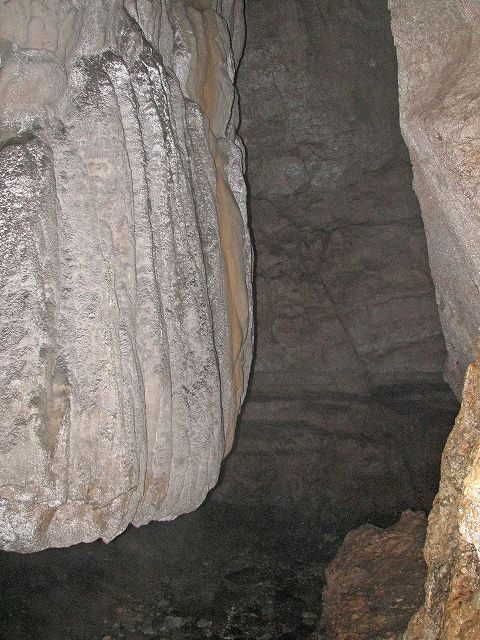
A limestone cave along the Chugoku Nature Trail, roughly 10m high and 7m wide. Bishamonten, a guardian deity of Buddhism, is enshrined within it, and the cave itself has long been an object of worship — one of Jinseki Kogen's sacred sites, where the natural forms of a limestone landscape meet devotion.
A famous dog from Izumo
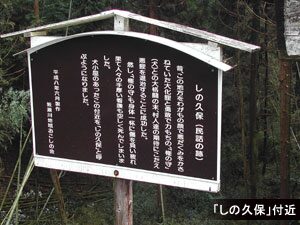
A story handed down in the Sakasegawa area from the Heian period, some 1,200 years ago. To defeat a great, monstrous badger tormenting the village, a clever and powerful dog named Gon no Kami was borrowed from the province of Izumo. It is said to have defeated the badger and restored peace to the village, and a grave was built here in honor of its deed.
A king's grave from 1,600 years ago
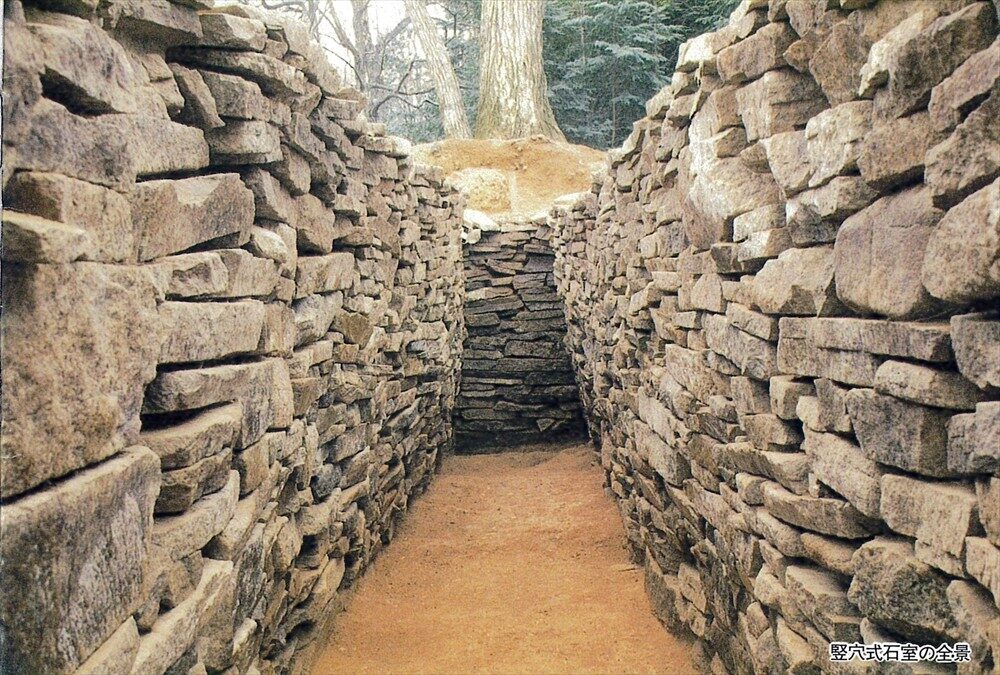
A keyhole-shaped burial mound said to be the grave of a powerful ruler from the mid-4th century, roughly 1,600 years ago. At 78m long, it is considered one of the largest early kofun in Hiroshima Prefecture — a site attesting to the presence, already at that time, of a power in this land significant enough to have ties to the Yamato court.
A shrine with dragon carvings
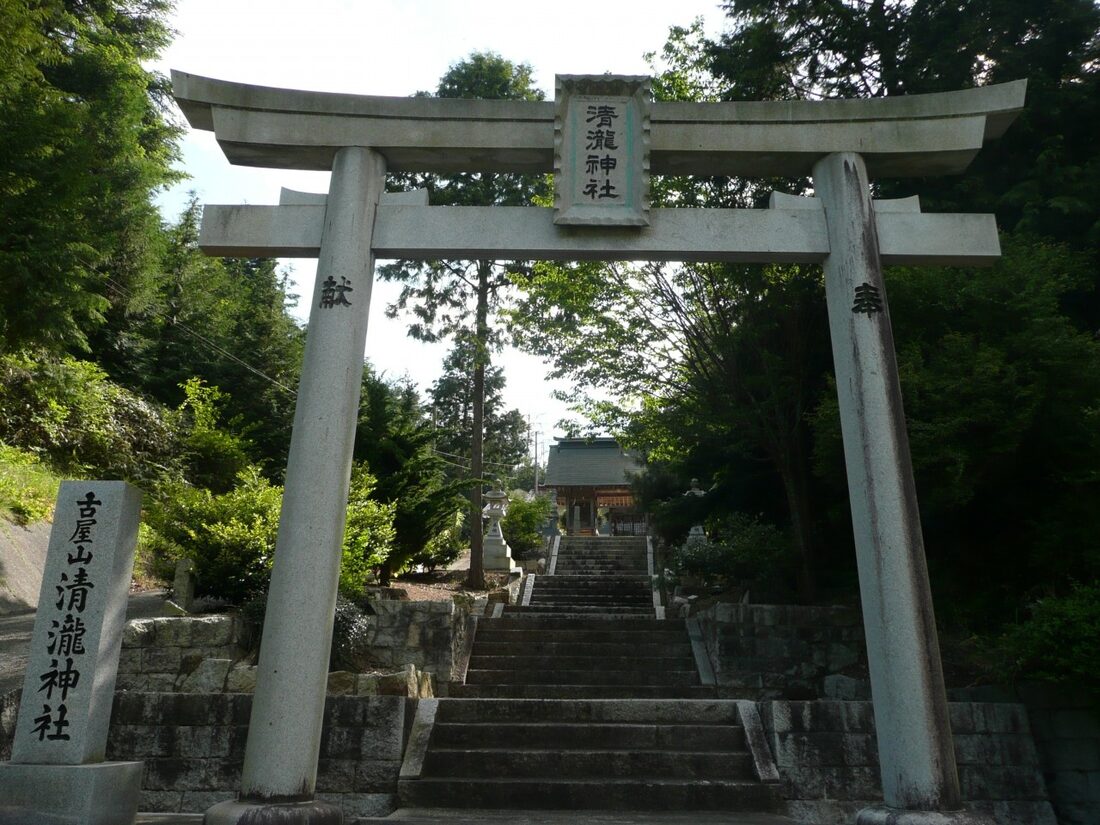
A shrine built in 1727, decorated with magnificent dragon carvings reminiscent of the Azuchi–Momoyama style. The design of the dragon god, associated with water, quietly speaks to how essential water was to life on this highland.
Still more stories from the highland
A cave, a burial mound, a famous dog's grave, a shrine carved with a water god — beyond the four stories introduced above, Jinseki Kogen holds many more historic sites and legends. An old shrine guarded by a deep grove, a camellia that has bloomed for centuries, traces of prehistoric daily life, and a stone tablet carved to honor the labor of nameless people. Here are a few more of these stories.
A shrine in the Sanwa area said to be one of the largest of its three-bay style (sanken-sha) in Hiroshima Prefecture. Cedars and hemlocks estimated at 300 years old line its grounds, and the deep grove lends this old shrine a solemn air.
An ancient camellia tree, said to be about 700 years old, standing in the grounds of Kyosaiji Temple in the Tokiyasu district. Its trunk measures 2.27m around and it stands 8m tall, still blooming every March and April. Tradition holds that it was planted by a monk connected to the temple's founding; it was designated a Hiroshima Prefecture Natural Monument in 1981.
A limestone cave site where Jomon-period pottery and cord-marked ware have been found across its upper and lower chambers. Set in the same limestone terrain as the Bishamon Natural Cave, this one carries not a shrine but traces of prehistoric daily life.
A stone monument, its carved characters some 16m tall, commemorating a seven-year road project in the early Showa era that cut a path through the steep mountains between Tengawa and Minaidani. It stands as a memorial to the labor of countless unnamed people who opened the roads that support life on this highland.
A governor's office on the highland
After the Battle of Sekigahara, the area now known as Sanwa passed through the hands of several feudal domains, including the Fukushima and Mizuno clans, before ultimately becoming a detached holding of the Nakatsu Domain, ruled by the Okudaira-Matsudaira family. The site of the present-day Jinseki Kogen Town Hall is said to have been the seat of the governor's office (daikansho) that administered this territory.
A local figure of the Murata family is said to have been appointed as daikan (regional administrator) and to have offered his own residence as the site of the office; a diagram recording the layout of the buildings at the time has also survived. A stone monument marking this history still stands quietly on the town hall grounds today.
A note. The Nakatsu Domain was based in what is now Nakatsu City, Oita Prefecture — far from this mountainous corner of Bingo. That it held a detached territory here is a reminder that early-modern domains were not always geographically contiguous.
A memory of the bombing, carved in literature
The novelist Ibuse Masuji (1898–1993) wrote "Black Rain" (Kuroi Ame), a novel depicting the atomic bombing of Hiroshima and its aftermath. Later adapted into film and television, it is considered one of the defining works of postwar Japanese literature. The story is said to have grown out of Ibuse's real friendship with a man from the Obatake area of the former Sanwa Town.
While staying at an inn along a mountain stream run by this man, Ibuse heard the story of the man's niece, who had been exposed to the atomic bomb, and is said to have drawn on her records and the testimony of local people as he wrote. The work began serialization under a different title in 1965, was retitled "Black Rain" that same year, and was completed in 1966.
Today, a literary monument inscribed with a passage from the novel stands in Tsutsujigaoka Park, near the man's former home. Speaking quietly of the horror of war and the value of peace, this monument is a reminder that Jinseki Kogen is not only a land of legend, but also a place deeply tied to the memory of modern Japan.
The highland's history, told through its designated properties
Jinseki Kogen town is home to many cultural properties designated at the national, prefectural, or town level. Each such designation is a mark of publicly recognized value, and offers a way of placing the stories introduced here within a firmer historical context.
Designated or not, most of these cultural properties have been protected and passed down over many years by the hands of local people themselves. Official "designation" is something that came afterward; their true value lies in the generations-long practice of care that has carried them to the present.
A spring preserved in verse
A place known as "Uta no Shimizu" (the spring of the poem) and its hall carries a tradition that Saigyo, a poet-monk of the late Heian period, once visited. This is the poem he is said to have composed there.
Cupped in my hands, the clear water among the rocks —A waka attributed to Saigyo at Uta no Shimizu
even the shadows of passers-by look cool.
Dip your hands into the clear water, and it is transparent to the bottom; even the reflections of passers-by seem to look cool — a poem that conveys just how deep an impression this pure water left on a traveler crossing the highland. Alongside legends of the gods, this traveler's gaze, too, is part of the memory of this land.
Beyond Uta no Shimizu with its ties to Saigyo, the Sanwa area also carries a tradition of a spring known as "Nagaiki no Mizu" (the water of long life). No record survives to confirm the origin of the name, but the fact that legends of pure water are scattered across the highland, not confined to a single place, speaks to just how highly its people have long valued water.
In closing
A mountain where stars fell, a stone shaped like a turtle, a gorge bearing the name of Taishakuten, kagura that calms the Kojin, and caves, tombs, and a famous dog's grave. What these stories scattered across Jinseki Kogen share is a single practice: people sensing the presence of gods or something sacred in things found in nature — mountains, stone, water, caves — and telling, enshrining, and dancing that presence down to the present day.
Many of the traditions introduced on this site were compiled in later times from administrative records, local gazetteers, and oral tradition, and are not necessarily corroborated by contemporary primary sources. Even so, the very care with which these stories have been handed down speaks eloquently to the depth of faith among the people who have lived on this highland.
Read about Notable People →